
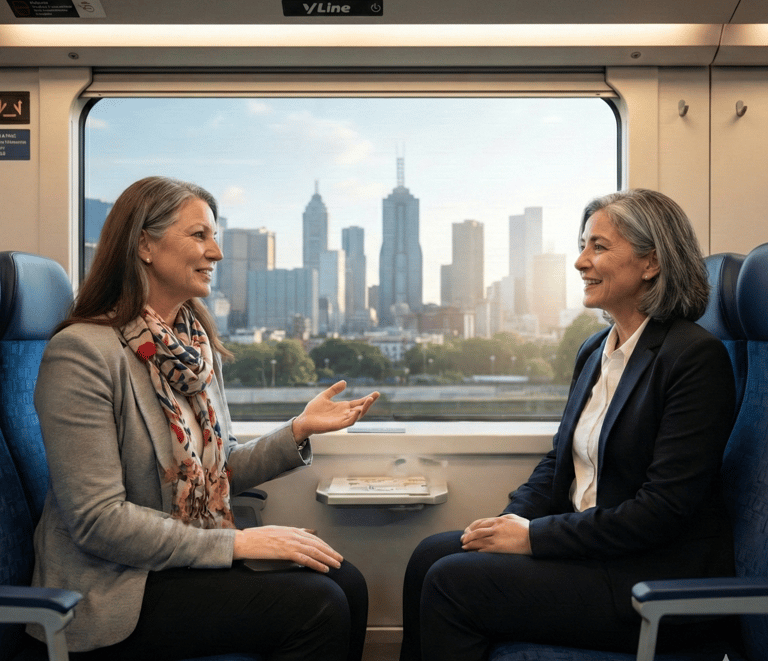

"What do you do?"
The question came from a fellow passenger on the train into Melbourne's CBD. My answer? "End-of-life education – I help people talk about death and dying."
The pause that followed is one I know well. That slight intake of breath. The momentary uncertainty.
Yet what happens next is remarkable. Every single time, that initial discomfort transforms into something precious – a genuine conversation. Safe. Gentle. Human.
She shared about her father's death. What she wished she'd known. The conversations that never happened. The relief when they finally did. Like so many others, she offered insights that are pure gold – the kind that come from lived experience rather than theory.
Here's why this matters in the workplace:
Your team members are having these experiences. They're navigating aged parents, serious diagnoses, unexpected losses. Often in silence, because we've made death a taboo topic at work.
But when we create space for these conversations – when we move from fear to empowerment – something shifts. Employees feel supported. Difficult situations become manageable. Advance planning happens before crisis strikes.
The compassion we show colleagues during life's hardest moments? That's culture. That's retention. That's leadership. The question is whether they'll do it feeling supported or alone
Is it time to move death literacy from "too hard" to "essential capability?”
Get in touch
Contact Details
Mobile: +61 0401 316 809
Email: donna@mavenbridge.com.au
I would welcome an opportunity to work with you . Please feel free to reach out either by phone or email.